Why beeswax works on lips
Lips do not have the oil glands the rest of your skin relies on, so they lose water faster and chap more easily. Beeswax does several useful things at once that, taken together, make it one of the best natural ingredients for lip care.
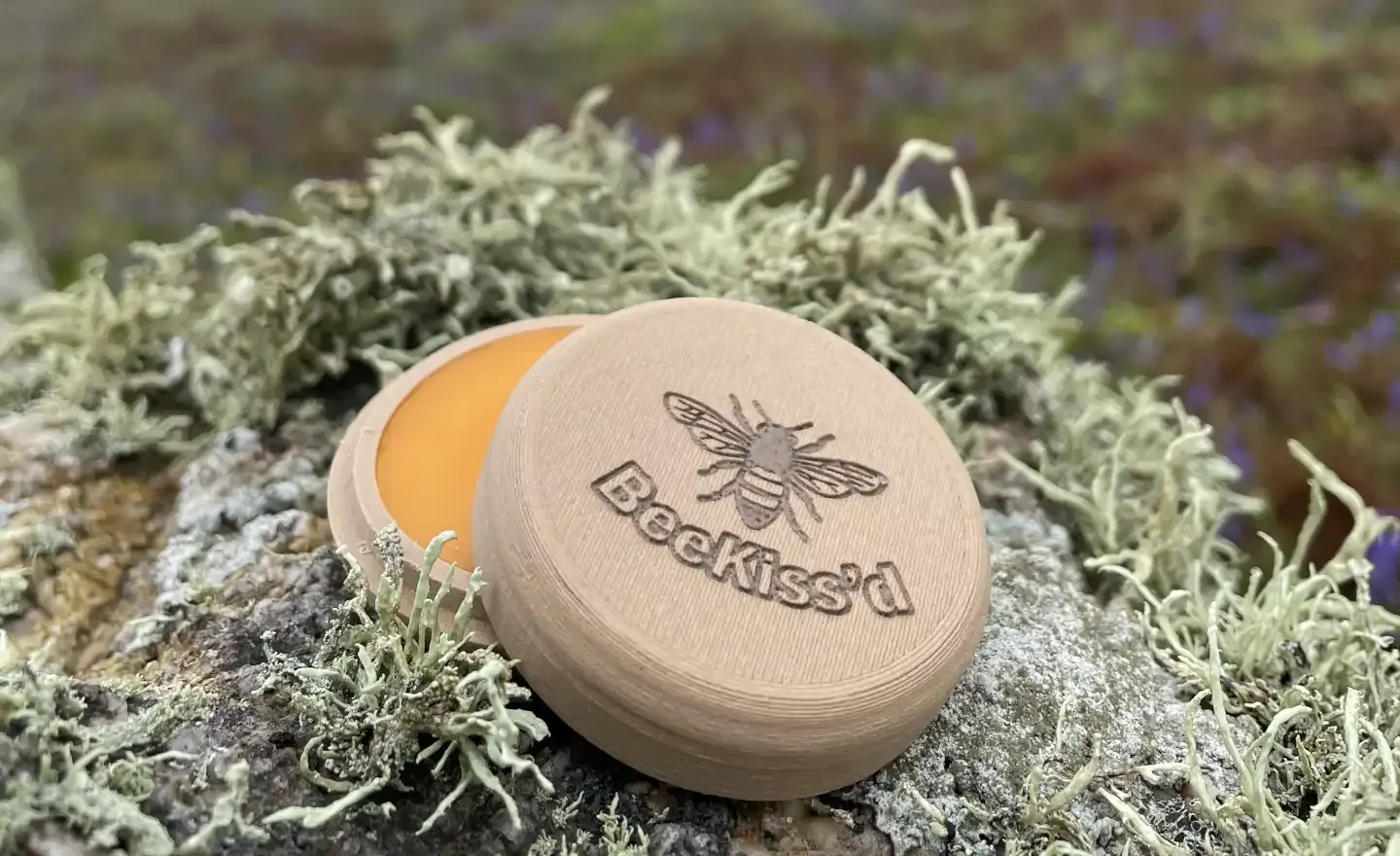
What beeswax actually is
Beeswax is secreted by worker bees from glands on their abdomen, usually only when there is a strong nectar flow and the hive is warm. They use it to build the honeycomb that holds honey, larvae and pollen.
As a beekeeper you collect wax mostly during routine comb replacement. Modern beekeeping practice is to rotate combs out every few years because pesticides and pathogens accumulate in old wax - so harvesting it is genuinely good for the colony.
What it does on lips
A breathable moisture barrier
Beeswax is occlusive, meaning it forms a thin film on the skin that slows the evaporation of water. Unlike petroleum-based occlusives such as petrolatum, the film lets the skin function normally underneath while still slowing transepidermal water loss.
Long-lasting because of a high melting point
Beeswax melts at around 62-65°C - well above body temperature - so a balm built around it stays put far longer than one built around plant butters that start to melt in the mid-30s. That is why a beeswax balm tends to outlast a coconut-oil one in cold or windy weather.
Mild anti-inflammatory and antibacterial action
Beeswax contains naturally occurring fatty acids and trace amounts of propolis which together give it mild anti-inflammatory and antibacterial properties. On chapped lips that means it both calms irritation and helps keep things clean while the skin recovers.
Trace vitamin A
Beeswax contains a small amount of natural vitamin A, which supports cell regeneration and contributes to healthy-looking lips. It is not the main reason to use beeswax but it is a useful side benefit.
A natural thickener and stabiliser
In a balm formulation beeswax also acts as a structural ingredient: it holds the oils in place so the balm has a solid form, retains its shape on the shelf and does not separate.
Where the wax comes from matters
A balm is only as clean as the wax inside it. Imported wax often carries residues from the antibiotics and miticides used in overseas hives. We use Welsh beeswax from beekeepers we know - covered in detail on the Environmental Impact page.
Read the full benefits write-up